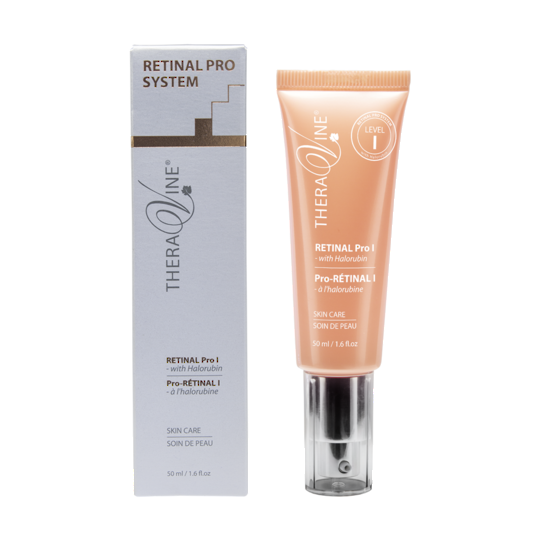
Retinaldehyde, or RetinAl for short, is a next-generation form of vitamin A that is proven to deliver results much faster than its predecessor.
- Have been available for as long as Retinol but until recently were not studied to the same extent and rarely used in skin care products as it is expensive, extremely difficult to formulate with
- It has all the benefits of Retinol but with the added benefit of accelerated action
- Strongest option available for use in cosmetic applications
- Moderate risk of side effects but less than Retinol
Effects
• Anti-aging, reduction in lines and wrinkles
• Evens skin tone and encourages a more radiant and glowing complexion
• Promotes softer and smoother skin texture
• Less visibly congested and clarified complexion
• Protection against photo-aging and free radical damage
• Increased skin hydration
• Can assist in improving the appearance of Rosacea
Functioning
• Boost collagen and elastin production, increase dermal thickness, improve skin elasticity
• Decreases melanin synthesis to address pigmentation irregularities
• Aids cell proliferation
• Powerful anti-bacterial properties, unclogs pores and improves the appearance of problematic skins
• Fights free radical damage
Halobacterium Salinarum is a single-cell organism that are able to withstand extreme conditions such as
desiccation, starvation and radiation,and is commonly found in salt lakes that turn pink.
Effects
A powerful cell protective booster that:
- Provides DNA protection against oxidative stress
- Protects against photo-aging
- Fights free radicals
- Offers protection against damage caused by blue light (screen light) by blocking its penetration into the skin
- Strengthens the epidermal barrier system
- Reduces TEWL and helps to maintain optimal cell hydration
Functioning
- The membrane of this organism contains carotenoids, which are the secret to their survival powers in extreme conditions
- The cell membrane also contains retinal, which enables the organism to survive constant UV exposure and even generate energy from it, regardless of a very high salinity in its environment
- Thanks to its long molecular structure, it positions itself between the tails of phospholipids within the cell membranes, which helps to prevent oxidative damage while also reducing water permeability across the membrane